Efficacy backed by research
Our bioferments are the result of research, scientific collaboration and real results — tested for efficacy, safety and impact on the skin microbiome.

We don’t rely on promises
Together with the Poznań University of Life Sciences we developed innovative formulas that have been thoroughly tested for efficacy, safety and impact on the skin microbiome.
Research results
In vitro and in vivo tests of face-cream formulations containing a bioferment.
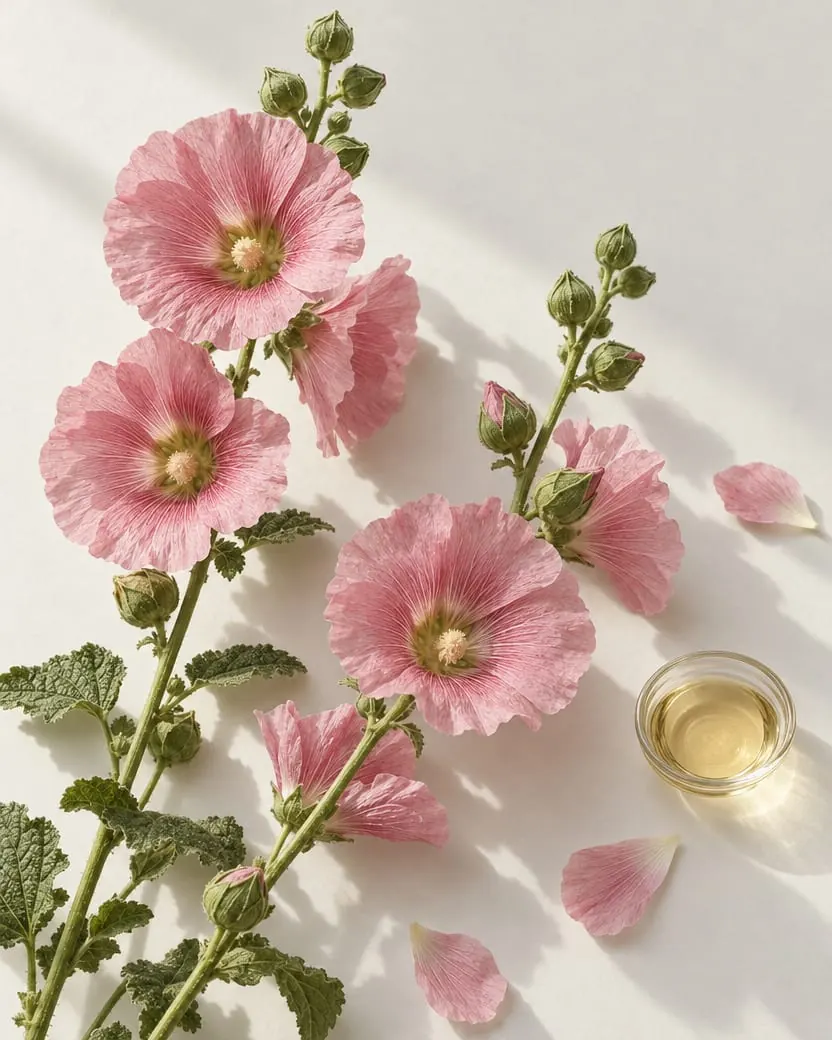
High biofunctional potential
In vitro and in vivo tests show a high, experimentally confirmed biofunctional potential of a face-cream formulation containing 2% hollyhock bioferment.
In vitro research
The microbiological test results show that the developed cosmetic formulation has very good microbiological stability during storage under various extreme temperature conditions. The tested samples achieved microbiological purity category I for cosmetics. No growth of potentially pathogenic, mesophilic or psychrophilic microorganisms was observed.
The analyses showed that a face cream enriched with hollyhock bioferment has a significantly higher antioxidant potential than the formulation without this bioactive ingredient. This means the cream neutralises free radicals more effectively, providing better protection against oxidative stress and premature ageing.
| Formulation | DPPH mmol Tx/g d.m. | ABTS mmol Tx/g d.m. | Chelating activity 1500 ppm (%) |
|---|---|---|---|
| Cream with bioferment | 3,8–3,9 | 4,7–5,9 | 12,9–14,3 |
| Cream without bioferment | 2,1–2,5 | 2,8–3,2 | 8,5–9,0 |
As a result, the product not only supports a healthy-looking complexion but also strengthens the skin’s natural defence mechanisms, making it an ideal choice for effective antioxidant care.
A key aspect of cosmetic efficacy is the ability to fight pathogens colonising the skin surface while supporting its natural microbiome through prebiotic properties. The research showed that the product effectively limits the growth of pathogenic bacteria while supporting the growth of skin-friendly microorganisms.
Antimicrobial activity against
- Clostridium difficile
- Enterococcus faecalis
- Escherichia coli
- Pseudomonas aeruginosa
- Cutibacterium acnes
- Staphylococcus aureus
- Streptococcus pyogenes
- Candida albicans
Prebiotic activity towards
- Lactobacillus acidophilus
- Lactobacillus casei
- Lactobacillus plantarum
- Lactobacillus brevis
- Lactobacillus rhamnosus
- Lactobacillus reuteri
The strongest antimicrobial potential was shown against Cutibacterium acnes and Staphylococcus aureus, which are responsible for inflammatory conditions of facial skin.
Research with volunteers
20 volunteers aged 18 to 69 (75% women, 25% men), including 15 people with a history of allergies, excluding people allergic to the product’s ingredients. The study was carried out under the supervision of a dermatologist.
The test assessed the irritation level and sensitising properties of a cream containing hollyhock bioferment. The product was applied to filter-paper discs, which were then fixed to the participants’ skin with hypoallergenic tape. Readings were taken immediately after removing the patch and after 72 h. The participants’ skin and subjective sensations were assessed by a physician before, during and after the study.
100% of patch-test participants reported no irritation or allergic symptoms.
All participants showed a progressive improvement in skin hydration over the course of the test. A particularly marked increase was recorded with the cream containing 2% hollyhock bioferment.
All study participants showed a significant improvement in TEWL. The changes indicate a substantial strengthening of the skin barrier, and longer use of the product correlates with further improvement. According to cosmetological practice, an epidermal water content above 10% ensures a normal, healthy-looking skin.
After just one week of use, the participants’ skin pH stabilised and remained at the optimal level of 5.5 — key for proper enzymatic processes and protection of the skin barrier, especially in sensitive-skin care.
Skin elasticity ranged on average from 60–90%. The greatest increase was recorded with the cream containing 2% bioferment. A value of 100% corresponds to the elasticity of a newborn’s skin, which makes these results particularly significant.
Studies using direct profilometry showed a significant reduction in wrinkle width in participants using the cream with 2% hollyhock bioferment. After 4 weeks of regular use, wrinkle width decreased by an average of 12.6%.
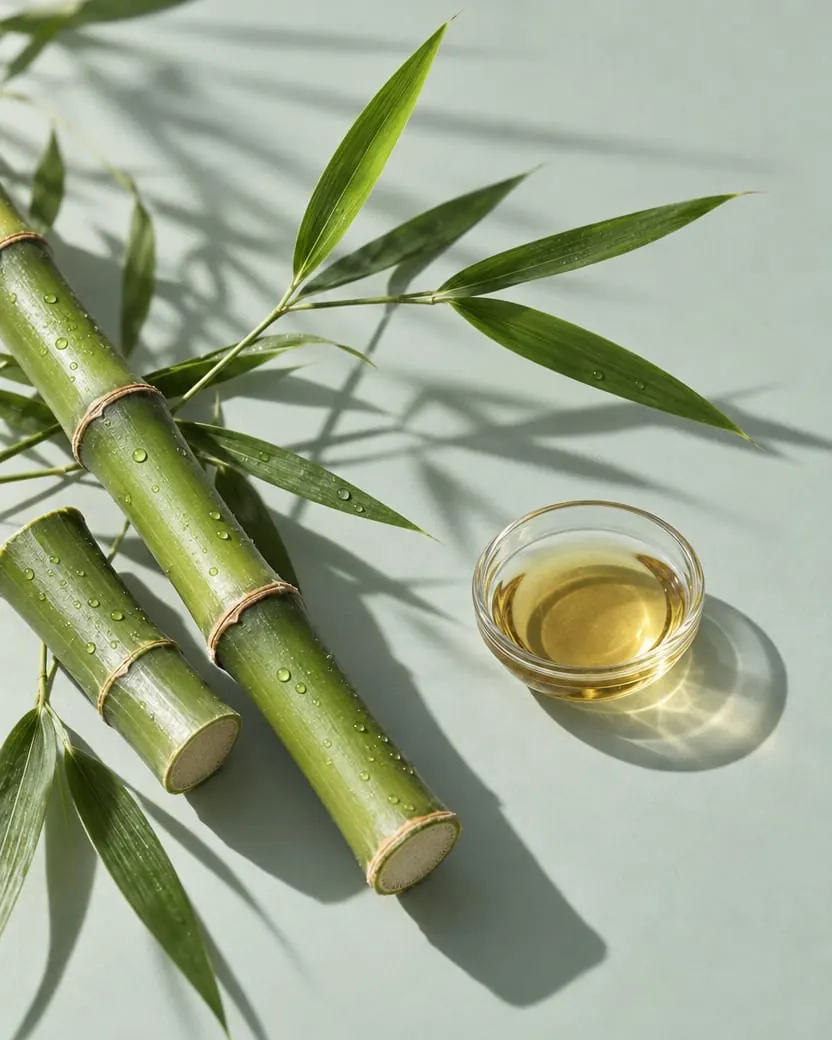
High biofunctionality
In vitro and in vivo results confirm the high biofunctionality of a face cream containing bamboo bioferment, as documented in experimental tests.
In vitro research
The developed cosmetic formulation shows excellent microbiological stability during storage under various extreme temperature conditions. The samples achieved microbiological purity category I for cosmetics, meaning no growth of potentially pathogenic, mesophilic or psychrophilic microorganisms.
A face cream with bamboo bioferment shows a significantly higher antioxidant potential than the variant without this ingredient — it neutralises free radicals more efficiently, giving the skin better protection against oxidative stress and premature ageing.
| Formulation | DPPH mmol Tx/g d.m. | ABTS mmol Tx/g d.m. | Chelating activity 1500 ppm (%) |
|---|---|---|---|
| Cream with bioferment | 3,8–4,0 | 4,7–5,0 | 12,0–13,0 |
| Cream without bioferment | 2,1–2,5 | 2,8–3,2 | 8,5–9,0 |
The formulation enriched with bamboo bioferment has significant antimicrobial activity, effectively fighting skin pathogens such as Pseudomonas aeruginosa and Staphylococcus aureus. Analyses of preservative-free preparations confirmed that the bioferment not only strengthens the skin’s barrier functions but also promotes the growth of beneficial microorganisms.
Antimicrobial activity against
- Clostridium difficile
- Enterococcus faecalis
- Escherichia coli
- Pseudomonas aeruginosa
- Cutibacterium acnes
- Staphylococcus aureus
- Streptococcus pyogenes
- Candida albicans
Prebiotic activity towards
- Lactobacillus acidophilus
- Lactobacillus casei
- Lactobacillus plantarum
- Lactobacillus brevis
- Lactobacillus rhamnosus
- Lactobacillus reuteri
Research with volunteers
20 volunteers aged 18 to 69 (75% women, 25% men), including 15 people with a history of allergies, excluding people allergic to the product’s ingredients. The study was carried out under the supervision of a dermatologist.
The test assessed the irritation potential and sensitising properties of a cream containing bamboo bioferment. Results were read immediately after removing the patch and after 72 hours, and the participants’ skin was monitored by a physician.
100% of patch-test participants experienced no irritation or allergic reactions.
All participants showed a gradual improvement in hydration over the course of the test, particularly marked with the cream containing 2% bioferment.
All participants showed an improvement in TEWL — the results indicate a significant strengthening of the skin’s protective functions in the groups using both the 1% and the 2% bamboo bioferment formulation.
After just 2 weeks of use, skin pH stabilised within the 5.3–5.5 range, which is fundamental in sensitive-skin care.
Elasticity ranged on average from 65–90%. Creams with 1% and 2% bamboo bioferment were similarly effective in improving the skin’s biomechanical properties.
Instrumental testing with the NATI V3 device (Skin Diagnosis by Beauty of Science) showed that a cream with 2% bamboo bioferment significantly improves skin parameters — the skin becomes smoother and its microstructure visibly improves.
The full results in one document
Biofunctional properties of a cosmetic formulation — research report (PDF, in Polish).
Download the researchQuestions? Looking for an innovative ingredient for your formulation?
We are here to help. Talk to our team of experts and start a partnership built on knowledge, technology and nature.