Bioferments and the skin microbiome – what does the research say?
Billions of microorganisms live on the surface of the skin, and their balance affects how the skin looks and defends itself. We look at how bioferments can support it – and what our research with the Poznań University of Life Sciences showed.
What is the skin microbiome?
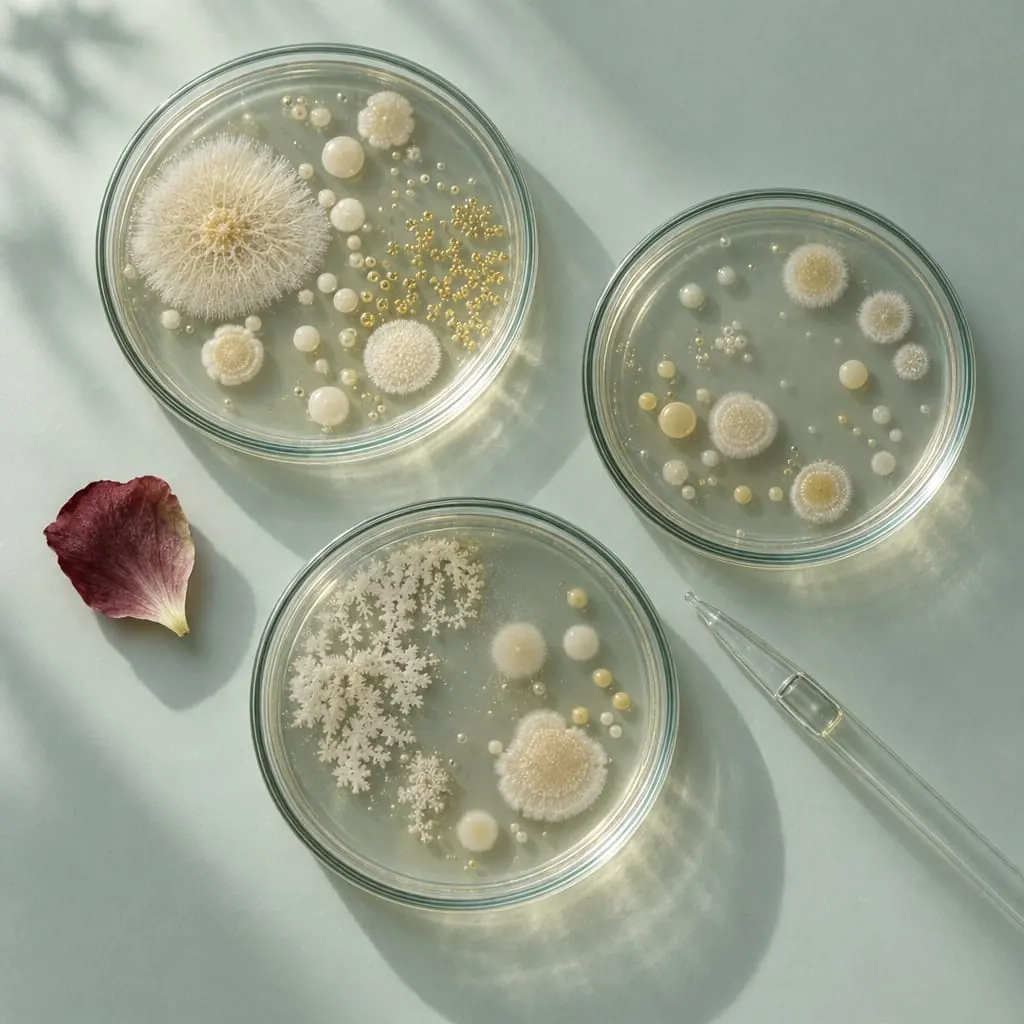
The skin microbiome is the community of bacteria, fungi and other microorganisms living on its surface. In healthy skin they form a stable ecosystem: beneficial microbes occupy space that pathogens could otherwise take, and together with the slightly acidic pH of the epidermis they form its natural protection.
When this balance is disturbed – for example by overly aggressive cleansing or poorly chosen skincare – the skin is more often dry, reactive and prone to inflammation.
Why does pH 5.5 matter?
Healthy skin is slightly acidic. A level of around 5.5 is key for proper enzymatic processes and for protecting the skin barrier – especially in sensitive-skin care. That is why pH stabilisation was one of the parameters we measured in our bioferment research.
How do bioferments support the microbiome?
Bioferments can work on the microbiome in two ways – supporting the “good” microorganisms and limiting those that harm the skin.
- Prebiotic action. In in vitro tests, formulations with our bioferments supported the growth of beneficial microorganisms, including Lactobacillus acidophilus, L. casei, L. plantarum, L. brevis, L. rhamnosus and L. reuteri.
- Antimicrobial action. The formulations limited the growth of pathogenic bacteria. The cream with hollyhock bioferment showed the strongest potential against Cutibacterium acnes and Staphylococcus aureus, which are responsible for inflammatory conditions of facial skin. Bamboo bioferment was effective against, among others, Pseudomonas aeruginosa and Staphylococcus aureus.
A bioferment not only strengthens the skin’s barrier functions but also promotes the growth of beneficial microorganisms.
What did our research show?
We tested face-cream formulations containing bioferments together with the Poznań University of Life Sciences – in vitro and with 20 volunteers aged 18 to 69, under the supervision of a dermatologist. Selected results for the hollyhock bioferment:
All participants also showed an improvement in TEWL (transepidermal water loss), indicating a stronger skin barrier. For the bamboo bioferment, pH stabilised within the 5.3–5.5 range after 2 weeks. See the full results on our Research page.
What does this mean for your brand?
Microbiome-friendly skincare is in line with conscious, sustainable beauty trends. A bioferment with documented prebiotic and antimicrobial action lets you base that promise on research results rather than claims alone – a real advantage on the shelf today.
Key takeaways
- The microbiome is the skin’s natural shield – its balance affects skin condition.
- A pH of around 5.5 supports the protection of the skin barrier.
- Bioferments can act prebiotically and antimicrobially at the same time.
- Our results: 100% without irritation, stable pH, −12.6% wrinkle width.